
Power in Numbers
Blog by Jim Brown, NBCT, CEM
7/8 STEM Teacher, Sand Creek
On-site Energy Manager
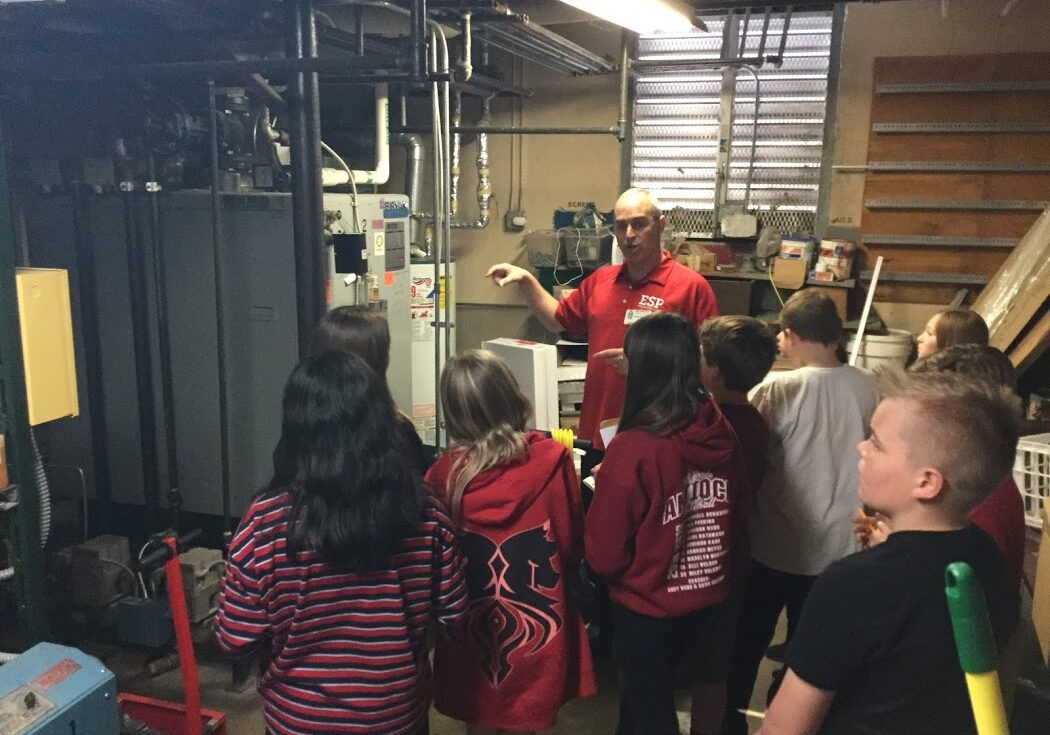
What an energy manager does can vary greatly from one organization to another. Some energy managers focus solely on managing building energy by utilizing software to control what and when things run. Other energy managers focus on being in buildings to verify that things are running correctly. Others still are more of a cheerleader, encouraging individuals to control what energy is being used by turning off and unplugging items not in use. Finally, an energy manager may focus entirely on utility billing. Any one of these types of energy managers is sure to save money on utilities. However, an organization that has someone in their organization touching on each of these points is bound to have the most success. In my role in my organization, I am generally the person in the buildings verifying that things are running correctly as well as the cheerleader encouraging users of our facilities to save energy. I also work closely with the person who utilizes the software to control what and when things run to and monitor our utility bills to help ensure we maximize our savings.
I like doing building audits in the middle of the night. At this time, the building is unoccupied, so what is not being used for basic building operations should be off. Walking in a dark, quiet building, enables me to easily hear and see items that are running. I also use an infrared thermometer to take the temperatures of closed doors to rooms as I am walking the halls. A temperature that is much higher or lower than typical alerts me to a problem that I can then investigate further.

If I see a light coming from a classroom, I will go in to investigate. Typically it is something inadvertently left on, such as a projector or large screen tv used with computers. When asking people to shut down items I am often asked, “How much of a difference can it really make?” For items commonly found left on, I plug a Kill-A-Watt™ Meter into it to find out exactly how much energy it is using when on and left idle. Once I know the energy use, I determine how much energy is being wasted by not turning it off when not in use and convert that to dollars wasted. For a typical large screen TV used in classrooms, it comes out to a savings of $18 per school year if turned off when not in use. This may not sound like a lot individually. However, if you consider that we have over 300 of these in the district, that amounts to over $5,000 of wasted dollars per year that could go towards other district expenditures.

Our district has over 1,000 employees. If each of us made one simple $18 change, we could save $18,000 each year and avoid wasting energy.
Author Bio: Jim Brown has over 25 years teaching experience at the middle school level, and has carved out a niche as a STEM teacher and a certified energy manager, specializing in energy management and auditing of educational facilities. Follow Jim Brown on X at @MrSTEMBrown.