
Celebrating 45 Years of NEED Curriculum
Sometime in the past 45 years, you may have attended a NEED Energy Education Workshop, where you mastered the Science of Energy stations, made an anemometer and designed wind turbine blades; observed UV beads change color in the sun and tested variables affecting photovoltaic panels; or tried “Getting the Oil Out” with a straw and explored porosity of sedimentary rocks. Unfortunately, you can only try a few of NEED’s awesome activities during a one-day professional development.
Did you know that NEED offers over 150 different curriculum modules, large and small? We have activities that meet science standards for every grade level. You can explore all of NEED’s curriculum using our Resource Catalog or search the Shop section of our website to download free PDFs or view as an e-publication. To celebrate 45 years of providing quality energy education, NEED’s Curriculum Team is highlighting 45 of our awesome activities. We hope you’ll discover a new favorite!
Click here to view this list as a PDF.

Kids Teaching Kids
Energy in the Balance and Great Energy Debate
We use a variety of energy sources in the U.S. – no one source of energy meets all our needs. Energy in the Balance (grades 3-5) is a cooperative learning activity that encourages students to evaluate the advantages and disadvantages of the major energy sources through a series of critical thinking, charting, and graphing activities. Older students will evaluate the advantages and disadvantages of the major energy sources in Great Energy Debate (grades 6-12). Each student group represents one of the energy sources and develops arguments on the merits of its energy source over the other energy sources. In addition, students can teach others about conventional and alternative transportation fuels using the guide, Transportation Fuels Debate (grades 6-12).
Digital Media Presentations
Students are tasked with researching an energy topic and creating a digital media presentation that teaches others about their topic. Throughout the project, students will analyze the importance of graphic elements in learning and presenting and must synthesize the information they read to create their own graphics. Students also prepare a script, write an assessment for their audience, and facilitate discussion after presenting. Digital Energy (grades 5-12) is great for differentiated environments and multi-disciplinary classrooms, and can be a great building block after completing another kids teaching kids activity, Energy Expos (grades 4-12).
Energy Source Superhero
After reading about a source of energy in the Elementary Energy Infobook (grades 3-5), students design their own Energy Source Superhero, giving it a name, a colorful costume and logo, and describe how we use the source of energy. The Energy Source Superhero template is found in the guide, Elementary Energy Infobook Activities (grades 3-5).
Science of Energy Stations
Hands-on experiments and background information allow students to explore the different forms of energy and how they are transformed. Students are divided into six groups, with each group responsible for mastering the experiments within one station. Then, kids teach kids as other groups visit their station. Students lead the experiments, teach about the forms of energy present, and explain simple energy transformations. Instructions, guides, masters, and explanatory articles are provided for the teacher and students in three levels in this format: Elementary Science of Energy (grades 3-5), Intermediate Science of Energy (grades 6-8), and Secondary Science of Energy (grades 9-12). NEW for 2025, K-2 students can now learn about the Science of Energy, too, while observing teacher demonstrations and taking part in guided class discussions, as found in the guide, Primary Science of Energy (grades K-2).
Talking Trash
Available at two levels, Talking Trash (grades 3-5) and Museum of Solid Waste and Energy (grades 6-12), in this activity, students explore the relationship between trash and energy by researching different aspects of solid waste including recycling, source reduction, landfilling, and waste-to-energy plants. Then, students construct an exhibit, create a presentation, and use it to teach others.
Love Hands-On Learning
Cooking with Solar Energy and Solar Oven Challenge
Ooey gooey nachos with cheese. Melty marshmallow and chocolate s’mores. In this delicious activity, students build a solar oven and learn how the sun’s radiant energy is absorbed and transformed into thermal energy while it heats their treat. Cooking with Solar Energy is found in guides, The Sun and Its Energy (grades K-2) and Wonders of the Sun (grades 3-5), while the Solar Oven Challenge is found in the guide, Energy From the Sun (grades 6-8).
Greenhouse in a Beaker
In this activity, students model the conditions that occur in a greenhouse, or in our atmosphere during the greenhouse effect. Students create two models using beakers. One beaker contains a “normal” atmosphere. Excess carbon dioxide is added to the second beaker, creating a CO2-rich atmosphere. What effect will this added CO2 have on the air temperature? This activity is found in the guides, Understanding Climate Science (grades 6-8), Exploring Climate Science (grades 9-12), and the sampler guides, Climate Sampler (grades 6-12) and Climate Compilation (grades 6-12).
Peak Oil Game
This game simulates the production challenges experienced during the life of a well, and the processing challenges when refining hydrocarbon products. Students work as drillers and processors to mine oil from their oil fields (jars filled with colored beans) and send it through their processing plant. During this cooperative learning, hands-on activity, students identify the peak production period for a well and describe possible production challenges faced over the life of a well. This fun activity is found in the guide, Exploring Oil and Natural Gas (grades 6-12).
Sidekick Circuits
Electricity travels in closed pathways called circuits. A circuit can be series or parallel. Series circuits provide only one pathway for electricity to flow, while parallel circuits provide two or more pathways. This activity introduces the concept of circuits and provides a fun way to show others how a circuit works. Students wire their own circuits on our energy sidekicks, using bulbs to illuminate features on the image and adhesive conductive tape to connect the parts of a circuit. Students will enjoy the hands-on challenge and surprise you with their fun designs. Sidekick Circuits also makes a great parent night or community night activity and can be found in the sampler guide, Sidekicks Circuits (grades 3-12), and the guide, Exploring Offshore Wind (grades 9-12). Fun, holiday themed templates are available in the Shop, too.
Wind Can Do Work
In this activity, students make a model windmill, place it in the wind from a fan, and test it to find out how many paperclips it can lift. Younger students will diagram the system and label its parts, while older students will explain the energy transformations occurring. Wind Can Do Work is found in several guides, including Wind is Energy (grades K-2), Offshore Wind is Energy (grades K-2), Wonders of Wind (grades 3-5), Wonders of Offshore Wind (grades 3-5), Energy from the Wind (grades 6-8), Energy from Offshore Wind (grades 6-8), Exploring Wind Energy (grades 9-12), Exploring Offshore Wind Energy (grades 9-12), Your Future in Wind Energy (grades 9-12), Floating Offshore Wind (grades 6-12), and Exploring Ocean Energy and Resources (grades 6-12). Feel like a challenge? Pull away the instructions and provide students with a more challenge-based engineering approach with the version found in Excellent Energy Engineering.
Exciting Electricity
Electric Connections
Almost 40 percent of the nation’s energy is consumed by the electric power sector to generate electricity for homes, commercial businesses, and industry. We use a variety of nonrenewable and renewable energy resources to make electricity. Some energy sources produce a substantial amount of the electricity we consume, while others produce very little. In this activity, students work individually and collaboratively to rank and debate the sources of energy for electricity generation before researching to find out their actual contributions. Electric Connections is suitable for students in grades 5-12 and is updated annually in the guide, Energy Games & Icebreakers (grades K-12).
Mission Possible
Mission Possible is a cooperative learning activity for grades 9-12, in which student groups are challenged to develop an energy plan to provide more electricity for a growing country. Students consider the advantages and disadvantages of the energy sources available to increase electricity generation while considering environmental quality, economic demands, and quality of life. There are several options provided, including different levels of difficulty, and using computers and spreadsheets. The activity includes a limited number of variables and is not intended to be a perfect reflection of the realities of the global or national economies.
Science of Electricity
NEED’s Science of Electricity Model helps students be able to demonstrate and describe how electricity is generated. If students assemble their own models, they wind copper wire around the outside of a small container and assemble strong magnets on a rotor that spins inside the container. As the magnets spin inside the coil of copper wire, an electromagnetic field forms, generating electricity. Voltage is measured using a multimeter. Instructions for the Science of Electricity model are found in many pieces of NEED curriculum, including these guides: Understanding Coal (grades 6-8), Exploring Coal (grades 9-12), Energy from Uranium (grades 6-8), Exploring Nuclear Energy (grades 9-12), Wonders of Water (grades 3-5), Energy of Moving Water (grades 6-8),Exploring Hydroelectricity (grades 9-12), Exploring Ocean Energy and Resources (grades 6-12), Floating Offshore Wind (grades 6-12), Your Future in Hydropower (grades 9-12), Your Future in Marine Hydrokinetics (grades 9-12), and in the shop at Science of Electricity Model.
Small-Scale Electrolysis of Water
After observing an electrolysis demonstration using a Brownlee Apparatus Setup, students perform a small-scale electrolysis of water in this hands-on activity, using a petri dish, a battery, an electrolyte solution, and two (graphite pencil lead) electrodes. The energy provided by the battery breaks the bonds in the water and it decomposes into hydrogen and oxygen. Students will be able to describe how a water molecule can be separated into hydrogen and oxygen, and which element collects at the anode and cathode. These electrolysis activities are found in the guide, H2 Educate (grades 6-12).
Understanding Microgrids
In this hands-on activity, students build DC circuits to “power” one or two buildings on their own microgrid map. A microgrid is just a very small version of the power grid that can stand on its own power supply with a limited number of buildings connected to it. Some microgrids are single buildings with many occupants, such as a condominium high-rise, where homes are connected to solar panels covering the roof of the building. Another type of microgrid is an isolated community with a single power plant or generating source, such as a hydropower plant, that provides power to the small community but does not distribute the power to the rest of the grid. The Understanding Microgrids activity is found in the guide, Reliably Smart (grades 3-12), along with activities exploring electricity generation, transmission, storage, microgrids, smart systems, and metering.
Saving Energy Superstars
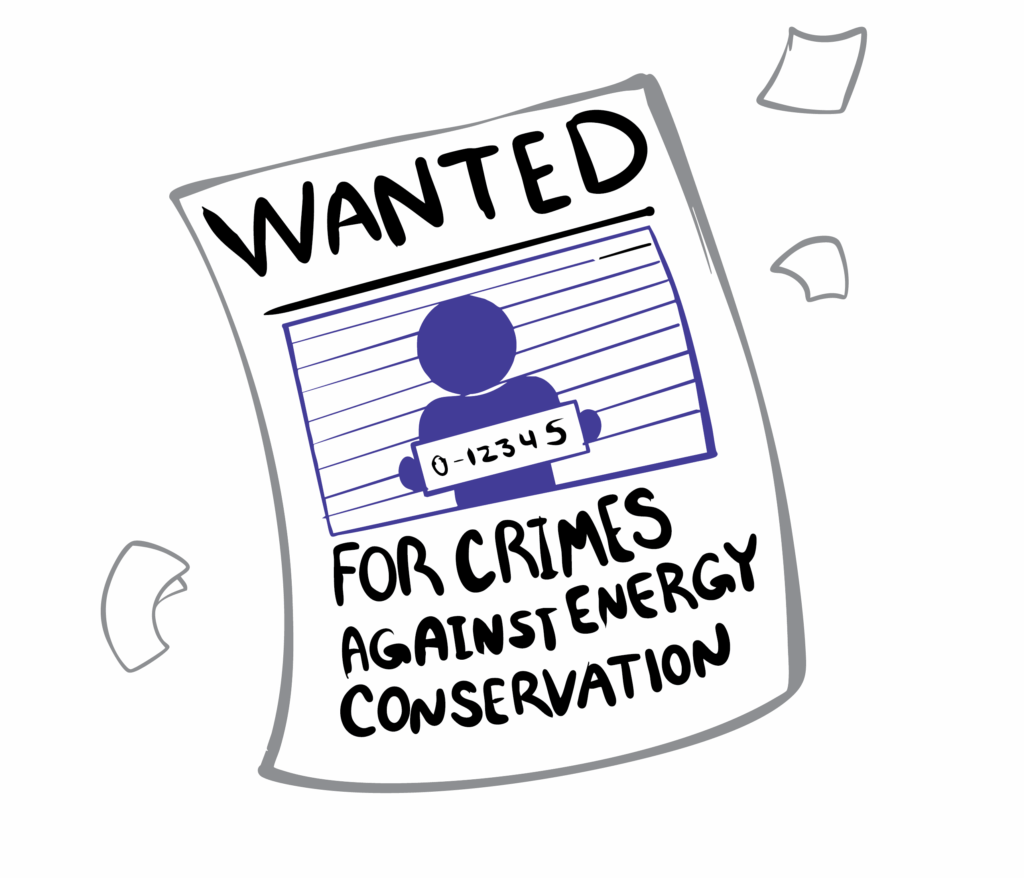
America’s Most Wanted Energy Wasters
Pose for your mug shots and create wanted posters to catch the energy criminals lurking in the classroom. This fun activity increases students’ awareness of their energy wasting habits and reinforces simple energy-saving behaviors. America’s Most Wanted Energy Wasters, suitable for grades K-12, is found in the guide, Energy Games & Icebreakers (grades K-12).
Energy House
The number one use of energy in a home is for heating and cooling. A poorly insulated home or faulty seals around windows and doors can have the same effect as leaving a window open all year long! In this activity, students model how insulation allows us to stay warm in winter and cool in summer and explain why efficiency and conservation measures make sense economically. This classic NEED activity is available in the guide, Energy House (grades 3-12). The sampler guide, Energy House Village (grades 3-12), includes additional activities, including multifamily dwellings, exploring heat islands, a design challenge, and adding solar power or electricity to the model homes.
Saving the Future Bingo
NEED bingo games are fun and educational. While playing Saving the Future Bingo, students learn how their energy conservation behaviors and actions save energy. Since every choice we make matters, by conserving energy today, we are helping make the future a better place. All of NEED’s bingo games, covering a wide range of topics, can be found in the Energy Games, Puzzles, and Activities section of the NEED website. Saving the Future Bingo (grades 3-12) is also found in the sampler guide, Energy Yesterday, Today, and Tomorrow (grades 3-12).
The Mystery of the Carbon Footprints
NEED plays are packed with information to build students’ background knowledge about sources of energy and energy conservation. Whether students read this play silently or put on a full production with props and costumes, students will learn what a carbon footprint is, and simple ways to decrease their personal carbon footprints while saving energy at home and in your community. The Mystery of the Carbon Footprintsis found in the guide, Energy on Stage (grades 3-12).
Today in Energy
Today in Energy (grades K-8) is designed to help students become aware of the ways they use energy every day. It introduces students to the concepts of choice, trade-offs, and cost. Students are given a budget of “energy bucks” for a day and a set of two-sided cards that have activity choices on either side. Students will use math and critical thinking skills to plan their day so that they can pay for their choices and still have fun.
Groovy Games
Energy Carnival Games
While playing NEED’s popular carnival games, students combine their academic skills and energy knowledge with their ability to toss and solve – learning while playing. Each game has complete instructions and reproducible masters and can be played independently. With a focus on energy and energy efficiency, the carnival games make an excellent activity for an energy fair, Earth Day celebration, or community event. Carnival games leveled appropriately for younger students are found in the guide, Primary Energy Carnival (grades K-3) while carnival games for older students can be found in the guide, Energy Carnival (grades 4-8).
Energy Jeopardy
NEED’s version of the popular television trivia game reviews and reinforces a variety of energy topics, including the science of energy, sources of energy, energy efficiency and conservation, electricity, transportation fuels, and energy careers. Students will buzz with excitement as they work in teams to answer Jeopardy, Double Jeopardy, and Final Jeopardy questions. Whether you play the Energy Sources version, or the General Knowledge version, all instructions and materials to run the game are included in the guide, Energy Jeopardy (grades 3-12). A convenient digital version of the game is available at NEED.org/shop.
Enigma
In this cooperative learning activity, students put on their detective hats and research clues to uncover energy facts. Teams use language arts strategies, critical thinking, and organizational skills to conceal the identity of their team while trying to guess which energy topic the other teams represent. It’s no mystery that Enigma is both fun and a great learning opportunity for students, so we have three versions to try. The sources of energy are covered in the guide, Energy Enigma (grades 7-12), transportation fuels are covered in the guide, Transportation Fuels Enigma (grades 7-12), and a wide variety of careers found in the energy industry are covered in the guide, Energy Careers Enigma (grades 7-12). Convenient digital fileversions of these games are available at NEED.org/shop.
Find the Renewable Sources! and Find the Nonrenewable Sources!
In this online game, students decide if Energy Sidekick icons represent renewable or nonrenewable sources of energy. If they choose correctly, the Sidekick colors in. These online games are also available as printable worksheets, found in the guide,Primary Energy Infobook Activities (grades K-2). Access the digital versions of these cute resources on the NEED website at https://www.need.org/Files/curriculum/infobookactivities/Primary/Nonrenewable.html
Global Trading
In this cooperative learning activity developed by the Ohio Energy Project, students become economic advisors, geologists, international traders, and miners as they analyze their assigned country’s resources and needs, then trade resources with other countries to enhance their economic position and environmental quality. This activity is found in the guide, The Global Trading Game (grades 5-12).
Marvelous Models
Baseload Balance
This activity demonstrates how electricity supply is transmitted on the electric grid to consumers. This hands-on activity is prepared for two levels, elementary and secondary, and encourages students to explore the differences between baseload and peak demand power, and how power companies and grid operators maintain supply to ensure customers have power as they need it.
The Elementary Baseload Balance activity, for students in grades K-5, is designed as a demonstration with a double pan balance. It is found in several guides, including the original Baseload Balance (grades 2-12), and School Energy Inspectors (grades 3-5). An Elementary Baseload Balance with Storage activity is available in the sampler guide, Electric Vehicles and the Grid (grades K-12).
The Secondary Baseload Balance activity, for students in grades 6-12, is designed as a simulation. It is found in several guides, including the original Baseload Balance (grades 2-12), School Energy Experts (grades 6-8), School Energy Managers (grades 9-12), Understanding Coal (grades 6-8, Exploring Coal (grades 9-12), Exploring Wind Energy (grades 9-12), Exploring Offshore Wind (grades 9-12), and the sampler guide, Interactive Energy Simulations (grades 3-12).
Carbon Cycle Simulation
Carbon cycles naturally through reservoirs in the environment over time. What happens to the carbon cycle when there is an excess of carbon in one or more of the reservoirs? This simulation helps students to visualize how the carbon cycle works and how carbon atoms are exchanged between reservoirs. This simulation uses both pre-Industrial Revolution and post-Industrial Revolution information to showcase the natural cycle and the cycle with excess carbon. This activity is found in the guides, Understanding Climate Science (grades 6-8) and Exploring Climate Science (grades 9-12).
Energy Flow Cards
In this activity, students use Energy Flow Card manipulatives to demonstrate the flow of energy through various systems. This hands-on activity is found in the guide, Energy Flows (grades 5-12), which explains the forms of energy and energy transformations to students. Energy Flow Cards that show energy transformations through food webs and the energy transformations to light a flashlight are found in the guides, Primary Science of Energy (grades K-2), Elementary Science of Energy (grades 3-5), and Intermediate Science of Energy (grades 6-8). For students in grades 4-12, Energy Flow Cards that model the energy flow from the sun to an electric vehicle are found in the sampler guide, Electric Vehicles and the Grid (grades K-12), and cards that model various automotive systems are found in the guide, Energy on the Move (grades 6-12).
Enhanced Fuel Recovery
Capturing carbon dioxide at the source of generation, pressurizing it to liquid form, and pumping it underground is one possible way to mitigate increasing carbon dioxide levels in the atmosphere. Using that pressurized carbon dioxide to increase production of a petroleum or natural gas reservoir is a way to turn a waste product into a useful tool for increasing petroleum or natural gas production. This hands-on activity models the enhanced fuel recovery process. Students build a model oil reservoir jar and inject it with carbon dioxide, pushing trapped oil and water from the reservoir into a production bottle. (Please note, in this activity, students useCO2 in a gas form to pump out the oil in their model reservoir. In actual practice, CO2 is pressurized and injected into the reservoir as a liquid. Geologic pressure keeps the CO2 in liquid form.) The Enhanced Fuel Recovery Model is found in the guides, Carbon Capture, Utilization, and Storage (grade 9-12), and Exploring Coal (grades 9-12).
Renewable Natural Gas
When garbage decays in a landfill, the raw biogas produced can be captured, cleaned, and converted into renewable natural gas, also known as biomethane. Renewable natural gas is burned for heating and to generate electricity, compressed into vehicle fuel, and used as a feedstock to manufacture biofuels. This hands-on activity models the formation of raw biogas. After students add yard waste, food scraps, yeast and water to a resealable plastic bag and place it in a warm location, they will observe decay, fermentation, and trapped biogas expanding the bag. This activity, It’s a Gas, is found in the guide Energy Stories and More (grades K-5), and also as, Biogas in a Bag, in the guide, Oil, Natural Gas, and Their Energy (grades K-2).
Powerful Performances
A Star War – Battle for the Sun
Guard the chocolate chip cookies baking in the solar oven! Dark Spacer and his Spacebloopers are wreaking havoc across the galaxy, trying to steal the sun. Luckily, Luke Stargazer, Han Solar, and his pal Sunblacca know all about solar energy and are here to save the day. NEED plays are packed with information to build students’ background knowledge about sources of energy and energy conservation. Whether students read this play silently or put on a full production with props and costumes, students will learn all about solar energy and the different ways we use it. A Star War – Battle for the Sunis found in the guide, Energy on Stage (grades 3-12).
Chants
The Forms of Energy Chants combine informative lyrics with fun hand-motions to help students remember the forms of energy. Performing chants is a great way to reinforce learning during Science of Energy (grades K-12) demonstrations and discussions. Forms of Energy Chants can be found in the guide, Primary Science of Energy (grades K-2). There is also an Energy Chants Game that introduces the ten leading energy sources in an entertaining manner. Each student starts with an energy source symbol taped to their back. To discover which source it is, they go around asking yes or no questions. Once the student has discovered their source, they start to do the energy chant for that source, to find others who are the same source.There are specific Energy Source Chants for students in grades K-2 and grades 3-12. Both activities are found in the guide, Energy Games & Icebreakers (grades K-12).
Creative Song Writing
Student musical groups research energy sources or transportation fuels, write informative lyrics, and perform their songs for their peers. Audiences learn more from these energy stars as they tell their stories to an interviewer out to get the latest energy scoop. Sample interviews and songs are included to get students rockin’ and rollin’. This amped-up activity is found in both Energy Live (grades 4-12) and Transportation Fuels Live (grades 4-12).
Roleplaying Different Points of View
In these activities, students consider multiple points-of-view regarding an energy issue as they conduct research, use critical thinking, and present perspectives in a public forum. In Wind Turbine Point of View, students in grades 3-8 identify the possible concerns and perspectives of community members and the pros and cons of a wind turbine installation. It’s found in the guide, Wind for Schools (grades 3-12). In the Siting and Permitting a Wind Farm activity, found in the guide, Energy from the Wind (grades 6-8), students identify the many benefits and challenges of siting a wind farm. In the Offshore Wind Stake Holder Roleplay, found in the guide, Energy from Offshore Wind (grades 6-8), students cite the major considerations when selecting an area for an offshore wind farm. In the Floating Offshore Wind Stake Holder Roleplay, found in the guide, Floating Offshore Wind (grades 6-12), students cite the major considerations when selecting an area for a floating offshore wind farm. In the Siting a Wind Farmactivity, found in Exploring Wind Energy (grades 9-12), students consider the concerns, challenges, and opinions of multiple stakeholders in a debate-style, mock town hall meeting. In the Nuclear Power Plant Hearing activity, students represent a citizen’s group either for or against a proposed nuclear power plant, and present their position to a NRC Panel that will decide whether or not to allow plans for the plant to proceed. This activity is found in the guides, Energy from Uranium (grades 6-8), and Exploring Nuclear Energy (grades 9-12). In Coal Plant Conundrum, students will explain how decisions are made regarding power plant fuel types as they participate in a discussion using a debate format, supporting and defending their viewpoints and reaching a consensus as necessary. This activity is found in Exploring Coal (grades 9-12). In Hot Topics in Hydropower, students assess the challenges associated with siting a power generation facility and the advantages and disadvantages of hydropower. This activity is found in the guides, Energy of Moving Water (grades 6-8) and Exploring Hydroelectricity (grades 9-12). In the activity EVSE Siting and Community Point of View, students act as city council members receiving funding to install electric vehicle charging stations. They need to understand community members’ differing points of view in order to pick the best location. This activity is found in the guide, Transportation Exploration (grades 2-5).
Story Pantomimes
During this activity, a narrator reads a descriptive story while students use props and actions to demonstrate the flow of energy and the energy transformations as they occur in the system. Suggested props and actions are included for each story. NEED has a few different story pantomimes to demonstrate energy flows using different sources of energy. In A Coal Story, students demonstrate the flow of energy to produce electricity. This activity is found in the guides, All About Coal (grades K-5), Energy Stories and More (grades K-5), Energy Flows (grades 5-12), and Intermediate Science of Energy (grades 6-8). A similar activity, called Electricity Production Simulation, is found in the guide, Elementary Science of Energy (grades 3-5). In A Natural Gas Story, students demonstrate the flow of energy to heat homes. This activity is found in the guides, Wonders of Oil and Natural Gas (grades 3-5), and Exploring Oil and Natural Gas (grades 6-12). In An Excellent EV Story, students model the energy flow from the sun, through a wind farm, to an electric vehicle. It is found in the sampler guide, Electric Vehicles and the Grid (grades K-12), and Energy on the Move (grades 6-12).
Food Fun
Candy Collector
This fun game introduces students to the terms “renewable” and “nonrenewable.” Students will get a closer look at how long energy sources will last when using only nonrenewable sources and when incorporating renewable sources of energy. Candy Collector, for grades 3-9, is found in the guide, Energy Games & Icebreakers (grades K-12).
Coal Mining and Mining Challenge
Students get a hands-on view of the surface mining process as they mine a cookie for chocolate chips, and explore the challenges of mining all the valuable resources while keeping the mine and surrounding land at a state that could be reclaimed and re-used in the future. The Coal Mining activity, for students in grades K-2, is found in All About Coal (grades K-5). In Mining Challenge, students also have jobs, such as mineral engineer, accountant, and miner, and the game has a financial component to determine net profits and loss, with a cost for tools and labor and fines for messy reclamation. The Mining Challenge, for students in grades 6-12, is found in both Understanding Coal (grades 6-8) and Exploring Coal (grades 9-12).
Energy Source Pizza Party
Hopefully students won’t drool on their papers as they research a source of energy in the Intermediate Energy Infobook (grades 6-8) and decorate a slice of pizza with facts, including how we use the source of energy and the advantages/disadvantages of its use. Tape slices together to create classroom renewable and nonrenewable pizzas… yum. The Energy Source Pizza Party template can be found in the guide, Intermediate Energy Infobook Activities (grades 6-8).
Licorice Decay and M&Mium Radioactive Decay
Radioactive decay is when an element spontaneously transforms into another by changing the number of protons in its nucleus. Certain isotopes are radioactive and emit energy as they decay to become stable. The time it takes for half of the atoms in a given mass to emit radiation and change to a more stable state is called a half-life. In these activities, students use licorice sticks and M&M® candies to create and compare half-life decay graphs. Licorice Decay, for students in grades 6-8, is found in the guide, Energy From Uranium (grades 6-8). M&Mium Radioactive Decay, for students in grades 6-12, is found in both Energy From Uranium (grades 6-8) and Exploring Nuclear Energy (grades 9-12).
Pretzel Power and Milk Jug MPGs
Does it matter which car you drive or which fuel it uses? In these activities, students learn that some vehicles are more efficient than others, allowing us to go farther with less fuel while being kind to the environment. Milk Jug MPGs helps students understand miles per gallon rating as a measure of fuel economy and is found in Oil, Natural Gas, and Their Energy (grades K-2), and Transportation Exploration (grades 2-5). During Pretzel Power, students compare cars and trucks using gasoline, diesel, biofuels, electricity, and other alternative fuels, and learn the benefits of carpooling. It is found in several guides, including Wonders of Oil and Natural Gas (grades 3-5), Energy on the Move (grades 6-12), and Fossil Fuels to Products (grades 7-12).
Cool Careers in Energy
Career and Technology Education
NEED has hands-on activities, inquiry-based explorations, group presentations, and cooperative learning activities curated with a CTE classroom in mind. Activities that provide hands-on experience with circuits, materials, models, controls, and career skills, are found in the guide, Your Future in Wind Energy (grades 9-12). During these activities, students will build circuits, measure wind speeds, graph the wake effect, build and generate electricity with a wind turbine, identify blade variables that impact the electrical output of a wind turbine, explore gear ratios, assemble and control a tower-lifting system to raise a model turbine tower, measure proportions of sediments while conducting a soil test for a wind turbine foundation, and learn about safety and careers in the wind industry.
Activities that provide hands-on experience with tools, circuits, materials, fluids, and job readiness are found in the guide, Your Future in Hydropower (grades 9-12). During these activities students will build circuits, describe the properties of insulating and conducting materials, read measurement tools, practice using and selecting the correct hand tools and fasteners, learn about materials science and materials selection for hydropower-related applications, explore gear ratios, observe flow rate variables, build a hydropower generator model, and experiment with micro-hydropower generation. To understand environmental impacts of hydropower projects, students explore water flowing in a stream, measuring linear speed, depth, flow, temperature, and dissolved oxygen.
Activities that provide hands-on experience with electricity, magnetism, and generating electricity from marine environments are found in the guide, Your Future in Marine Hydrokinetics (grades 9-12). During these activities, students will explore electromagnetism and see its effects, demonstrate and describe how electricity is generated, explore different technological areas of MHK generation currently in development, and build and test horizontal and vertical model wave generators that generate electricity.
I Am a Welder, I Am a Green Architect, I Am an Electrician
Go beyond community helpers and introduce young students to skilled trades and professional careers in the energy industry. Each career-themed lesson plan offers teacher demonstrations, vocabulary building with the Frayer Model, using science trade books to research informative text, an age-appropriate career assessment, and a variety of hands-on station activities that explore workforce development skills like finger dexterity, spatial awareness, attention to detail, and scale and proportion, as well as hands-on station activities that practice soft skills like active listening, written and verbal communication, and patience and problem solving. These activities are found in the sampler guide, My Future Energy Career (grades K-2).
Safety in the Round
This quick, entertaining game introduces or reinforces information about safety, safety equipment, and first aid. It isfound in the guide, Your Future in Wind Energy (grades 9-12). To introduce students to various careers that may be available in the energy industry, try Energy Careers in the Round, found in the guide, Energy Careers Excursion (grades 3-12).
School Energy Auditors
Students study the school building’s energy systems, collect and organize data, and prepare a presentation of their findings and energy saving recommendations. Student led audit activities are found in School Energy Inspectors (grades 3-5), School Energy Experts (grades 6-8), School Energy Managers (grades 9-12), and School Energy Survey (grades 9-12).
Energy conservation at home is important, too. Students lead families in studying their home energy systems and discussing their energy use for daily activities, educating them about energy-saving behaviors. Home audit activities are found in the guides, Managing Home Energy Use (grades 3-12) and Energy Conservation Contract (grades 4-12). For younger students, guided questions surveying their energy use at home and school can be found in guides, Using and Saving Energy (grades K-2), and Energy Stories and More (grades K-5).
Wind Energy Careers Guess Who? Game
This fun, low-tech activity helps students to become acquainted with a few interesting jobs in the wind energy industry. Students will play against each other, like they do in the classic Hasbro game, with the goal to identify their opponent’s energy career before their opponent can identify theirs. This activity is found in the guide, Your Future in Wind Energy (grades 9-12). Additional careers in the energy industry are introduced in the game, Energy Industry Guess Who?, found in the guide, Energy Careers Excursion (grades 3-12).